Column · @emilianojopb288
Recognizing Peptide Pureness: What 99%+ Actually Means
Comprehending Peptide Pureness: What 99%+ Truly Indicates
BOC Sciences offers extensive peptide screening services to clients throughout sectors, guaranteeing items meet strict market demands and assuring product consistency, safety and security, and efficacy. It additionally supports traceability-- each set's laboratory validation record can be connected to its COA and governing filings, developing a clear paper trail. In other words, strenuous laboratory validation is exactly how you verify to regulatory authorities that your peptide satisfies all top quality specs. It helps prevent conformity issues such as stopped working audits or item recalls due to top quality defects. This not only satisfies lawful requirements however inevitably secures patient safety and security.Reputable peptide providers always note their items this way and offer top quality reports with HPLC and MS information to support the pureness level. As long as you get peptides from a trusted source that provides a full certification of analysis, you can be certain in the peptide's purity quality and usage scope. Peptides are evaluated with a mix of methods, including HPLC for pureness, mass spectrometry (MS) for sequence verification, and nuclear magnetic resonance (NMR) for architectural analysis. These methods assist recognize the peptide's structure, verify the molecular weight, and identify any structural modifications or contaminations, making certain the peptide fulfills quality and specification requirements. With our extensive peptide evaluation system, Innovative Proteomics has created a highly delicate and specific platform.
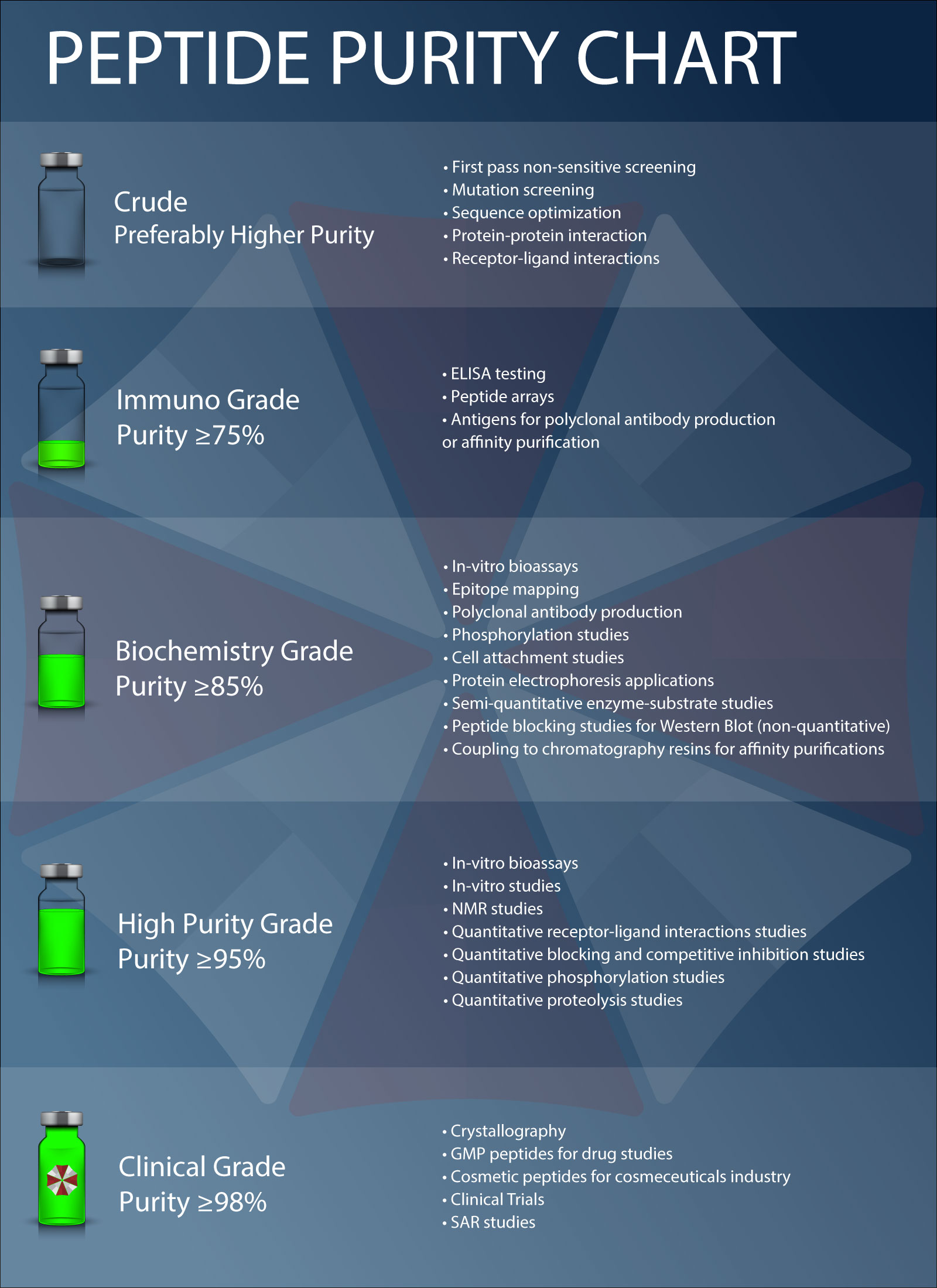
Innovative Peptides suggests a series of various purity levels to aid you pick the right peptide pureness for peptide-based assays and applications. The following checklist shows the recommended peptide pureness levels required for various peptide applications. Peptide identification is largely carried out using mass spectrometry (MS), which offers accurate measurements of peptide molecular weight. Additionally, techniques such as amino acid analysis and HPLC are employed to verify the peptide's identity and purity, guaranteeing precise characterization for numerous applications. We offer peptide identification confirmation making use of mass-based methods chosen for the sample and logical purpose. This is necessary when the major question is whether the observed element matches the intended peptide or whether a modification has actually been integrated as anticipated.
Peptide Pureness And Precision: How Laboratories Validate Make-up
The quality and dependability of a peptide pureness measurement depend on approach specifications and paperwork high quality. The mobile stage, frequently a combination of water, acetonitrile, and an acid modifier, is stored in tanks and supplied via the system by a high-pressure pump. The pump keeps accurate flow rates, commonly in the range of 0.5 to 2.0 mL/min depending on the technique and column layout. High pressure forces the mobile phase via firmly packed particles inside the column, creating sharper splittings up and higher resolution than conventional low-pressure chromatography.- The outcome is a peptide that's shorter than intended-- missing out on several amino acids.
- You can discover more regarding our logical screening protocols on our testing and high quality page.
- To put it simply, the purity portion has to do with the make-up of peptide varieties in the sample, not the weight contribution of water or salts.
- BOC Sciences uses extensive peptide screening services to customers across markets, ensuring products fulfill stringent market requirements and guaranteeing product consistency, security, and effectiveness.
- At Chameleon Peptides, every item ships with extensive third-party testing paperwork.
- By utilizing external laboratories for confirmation, distributors get rid of prejudice and maintain clinical credibility.
It is one reason appropriate peptide storage and reconstitution methods matter. Partial peptide pieces can result from insufficient synthesis or post-synthesis degradation. These fragments are generally smaller sized than the target peptide and may elute at various retention times.
How To Check Out An Hplc Chromatogram
Unlike a manufacturer's in-house testing, independent third-party lab validation Peptides UK official website is unbiased and offers impartial results, adding credibility via objective logical information. This process is critical for preserving high peptide quality due to the fact that the peptide market is largely unregulated in several locations, and without validation some vendors might supply impure, mislabeled, and even phony peptides [3] Making sure that each batch goes through proper lab screening assists validate the peptide's credibility and purity, which is vital for both research credibility and safety and security. Peptide pureness describes the portion of your sample that is the correct, unabridged peptide series, devoid of various other peptide-related pollutants. As an example, a pureness of 98% suggests that 98% of the peptide material is the intended product, while the other 2% may be undesired remnants of synthesis (such as incomplete series or amino acid deletion variants).
In addition to RP HPLC, our skilled scientists can likewise provide details on the molecular weight of peptides figured out by mass spectrometry. Matrix-assisted laser desorption ionization time-of-flight mass spectrometry (MALDI-TOF MS) and electrospray ionization mass spectrometry (ESI MS) are both most frequently used methods. This short article is offered academic and research study recommendation functions just. All peptides sold by Peak Laboratory are desired specifically for in-vitro research laboratory study usage and are not for human usage. Peptide screening documents need to be interpreted as batch-level analytical proof for research material, not as clinical-use permission. Apex's How to Review a Peptide COA guide goes through this process step by step.
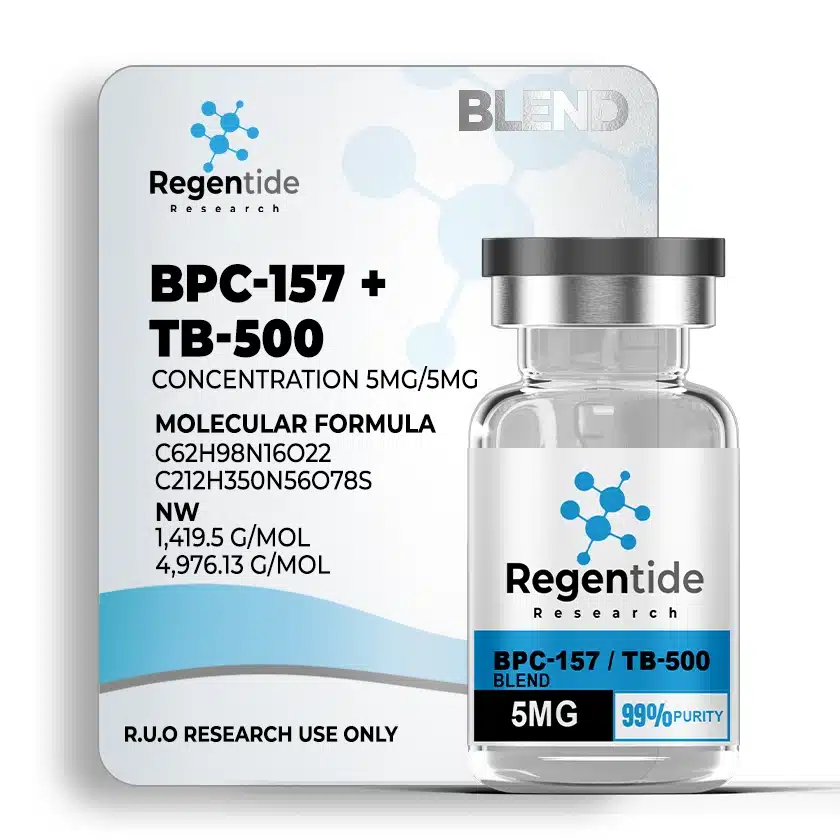
Along with HPLC and MS, specialized labs may use orthogonal techniques for included precision. As an example, capillary electrophoresis can be used to divide really hydrophilic peptides or to verify results, and MALDI-TOF mass spectrometry can assist in mapping bigger or modified peptides. Several peptide manufacturers or providers will certainly provide a COA (Certification of Evaluation), for example our bpc 157 tb 500 mix, that includes the pureness percentage by HPLC and identification verification by MS for each set. Top-tier laboratories commonly report peptide purity well above 95%, frequently ≥ 98-99%, by using modern HPLC and MS evaluations. They likewise examine both resources and completed peptide vials, which aids catch any type of impurities, degradation products, or formula disparities.